Character Artwork for Custom Costumes: Turnarounds, Colors and Mockup Checks
The best custom costumes start from character artwork that shows the front, side and back, names every color, and marks where logos and text sit. Customized Costumes turns that artwork into a free mockup within 24 hours, so a clean artwork pack means fewer revision rounds and a character that looks right from every angle on the day.
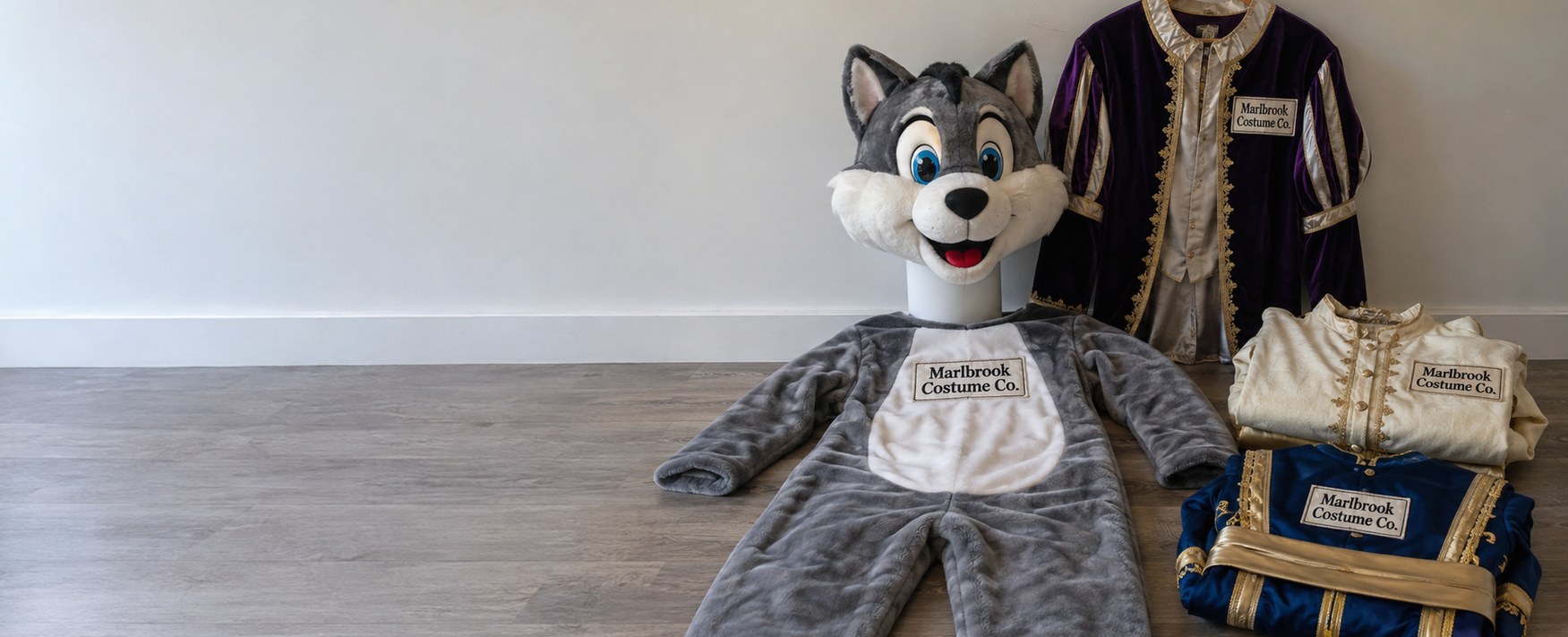
- Send front, side and back views of the character when you have them
- Name every color with a brand reference or a physical swatch
- Fine lines, gradients and tiny text are simplified for fur and fabric
- Free mockup within 24 hours, unlimited free revisions
- Pay nothing until you approve the design
What artwork do you need to order custom costumes?
To order custom costumes you need artwork that shows the character from more than one angle, a clear list of colors, and any logo or wording the costume must carry. Customized Costumes can start from a polished illustration, a rough sketch or a written description, but the more complete the artwork pack, the closer the first mockup lands.
A costume is a three-dimensional object worn by a moving person, so a single flat logo-style drawing leaves many questions open. What does the back of the head look like? How long is the tail? Are the hands gloves or paws? Each gap becomes a guess that you then correct in revisions.
A strong artwork pack for mascot costumes, costume heads and inflatables usually includes:
- The master illustration in the highest-quality file you have, ideally vector.
- Extra views of the side and back, even as quick sketches.
- Color references from your brand guide or a physical sample.
- Logo and text files kept separate from the character art.
- Notes on personality, such as friendly, sporty or regal, which guide the face.
Why does a character turnaround sheet matter for mascot costumes?
A character turnaround sheet matters because mascot costumes are seen from every side, while most brand artwork only shows the front. A turnaround places the front, side and back views next to each other at the same scale, which tells the builder how the head shape, ears, hair and tail connect into one solid form.
Without a turnaround, the builder has to invent the profile and the back of the head. That is where characters most often drift away from the brand: a snout that looks right from the front can read as too long from the side, and a flat cartoon tail has no obvious way to attach to a costume body.
If you do not have a turnaround, you do not need to commission one before contacting Customized Costumes. Quick sketches of the side and back, or photos of a plush toy or figure of the character, give enough direction for the first mockup. The mockup itself then becomes the place where the profile and back view are agreed before any foam is cut.
How do the colors in your artwork translate to fur, foam and fabric?
Colors in your artwork translate to costume materials by matching each flat color to the nearest available fur, fleece or fabric, and that match is always judged in physical light rather than on a screen. Fur in particular looks darker and richer than the same color in print, because the pile creates shadow between the fibers.
Give Customized Costumes every color as a named reference from your brand guide, or mail a physical swatch if the exact shade matters. Screens vary, so a color picked from a screenshot is the least reliable starting point. The table below shows how common artwork features are usually handled.
| Artwork feature | What happens on the costume | What to send |
|---|---|---|
| Flat brand colors | Matched to the closest fur or fabric | Brand guide references or a physical swatch |
| Gradients and soft shading | Simplified into solid color blocks | A note on which shade should dominate |
| Thin black outlines | Usually dropped or turned into seams | Confirm whether outlines matter to the brand |
| Highlights and shine | Added with contrasting fabric or paint on the head | Mark which highlights are essential |
| Metallic or neon colors | Approximated with available materials | Ask for a material note on the mockup |
Where should logos and text go on custom costumes?
Logos and text on custom costumes belong on large, flat, steady areas such as the chest, the back of a jersey or a sash, never on curved surfaces like the head or across a joint that bends. A logo on the chest stays readable in photos, while one wrapped around a sleeve disappears every time the performer waves.
Keep the logo file separate from the character illustration so it can be sized and placed independently. Vector files such as AI, EPS, SVG or PDF scale cleanly onto embroidery, appliques and printed panels. A small logo copied from a website rarely holds up at chest size.
Text needs extra care. Short words in a bold typeface read well from a distance, while long slogans and thin script fonts blur into the fur. For matched group and parade costume sets, each piece can carry a different name or role, so send a simple spreadsheet listing every name with the size it goes on. Historical and period costumes usually carry no logos at all, which keeps the look authentic.
What are the most common artwork mistakes on costume orders?
The most common artwork mistakes on costume orders are sending only a front view, relying on screen colors, and expecting fine detail that fur and foam cannot hold. Each one is easy to avoid if you prepare before requesting a quote from Customized Costumes.
- Front view only. The builder guesses the profile and the back, and the character drifts off brand.
- Low-resolution logos. A blurry file forces a redraw before the logo can be placed.
- Too much tiny detail. Eyelashes, freckles and thin stripes vanish on fur or crowd the face.
- Screen-picked colors. A shade that looks right on one monitor may not match the brand guide.
- Ignoring the performer. Huge heads or pointed ears can block the vision line and doorways.
- Several decision makers. Mixed feedback from many people slows the mockup down.
None of these mistakes is fatal, because revisions are unlimited and free. They simply add rounds that a prepared artwork pack would have skipped.
How should you check a costume mockup before approving it?
Check a costume mockup by comparing it against your original artwork view by view, then confirming the colors, logo placement, wording and performer details in writing. Customized Costumes sends the mockup within 24 hours of a complete request, and you pay nothing until you approve the design, so take the time to read it carefully.
Use this short checklist when the mockup arrives:
- Silhouette: does the character read correctly from the front, side and back?
- Face: do the eyes, mouth and expression match the personality you described?
- Colors: does each material note match a brand color or swatch?
- Logos and text: are spelling, size and position right on every piece?
- Names and sizes: does each name on a matched set sit on the correct size?
- Performer view: is the vision line where the wearer’s eyes will be?
Nominate one person to collect feedback and send a single, consolidated reply. After approval, standard production takes about 2 weeks, with express shipping available when the date is tight.
Does artwork prep differ for inflatables, costume heads and period costumes?
Artwork prep does differ by style. Inflatable costumes need bold, simple shapes because the fabric balloons outward, costume heads need a clear face and vision line, and historical and period costumes need research references instead of brand artwork.
Inflatable costumes stretch every detail as they fill with air, so small features grow and thin lines soften. Send the character with large color areas and a clear silhouette, and expect the mockup to simplify fine detail.
Costume heads and masks live or die on the face. Send close-up artwork of the eyes, nose and mouth, and say whether the character should look happy, determined or calm, because the expression is fixed once the head is built.
Historical and period costumes start from references such as paintings, photographs or museum records of the era. Send the sources you trust and note any details that must be exact, such as a uniform color or a particular collar. Customized Costumes uses those references to research the costume and shows the result on the mockup for your accuracy sign-off.
Frequently asked questions
Do we need a back view of our character before a mascot costume is built?
A back view is not required before a mascot costume is built, but it removes the biggest guess in the design. Without one, the builder invents the back of the head, the tail and the costume body. A quick sketch or a photo of a plush toy is enough. Customized Costumes then shows the back on the mockup so you can approve or correct it before production starts.
Can a costume mockup be created from a rough hand sketch?
A costume mockup can be created from a rough hand sketch, a photo of a drawing or even a written description of the character. Customized Costumes interprets the sketch into a clean design and returns a free mockup within 24 hours. Add notes on colors, personality and anything that must stay exact, and use the unlimited free revisions to refine the details until the character looks right.
How are eyelashes, freckles and thin outlines handled on a mascot costume?
Eyelashes, freckles and thin outlines on a mascot costume are usually simplified, enlarged or dropped, because fur and foam cannot hold very fine detail and tiny marks vanish at a distance. The mockup shows which details stay and how they are made, such as stitched felt or painted accents. Tell the team which small features are essential to the brand so those are protected.
Can a slogan be added to custom costumes along with the logo?
A slogan can be added to custom costumes, but short wording in a bold typeface works best on fur and fabric. Long sentences and thin script fonts blur at a distance. Place the slogan on a flat area such as the back, a sash or a jersey panel, away from the logo. Customized Costumes shows the exact wording and position on the mockup for proofreading.
What happens to gradients and shading when artwork becomes a costume?
Gradients and shading in artwork become solid color blocks when the design is turned into a costume, because fur and fabric come in flat colors rather than smooth blends. The builder picks the dominant shade for each area and may add a second material to suggest a highlight. Say which shade matters most, and Customized Costumes reflects that choice on the mockup.
Should a mascot costume follow a flat cartoon or a 3D render of the character?
A mascot costume can follow either a flat cartoon or a 3D render, and a 3D render usually gives the builder more information about volume and proportion. A flat cartoon is perfectly workable but leaves the depth of the snout, ears and belly to interpretation. Send both if you have them, and Customized Costumes will note which source the mockup follows.
How many revision rounds are included on a custom costume mockup?
Custom costume mockups at Customized Costumes come with unlimited free revisions, so there is no fixed number of rounds. You can adjust colors, proportions, expression, logos and wording as often as you need. Consolidated feedback from one decision maker keeps each round fast, and you pay nothing until the final design is approved and production begins.
Can a period costume be built from a painting or an old photograph?
A period costume can be built from a painting, an old photograph or a museum record, and those sources are often the best starting point for historical work. Send clear images and note what must be exact, such as colors, buttons or insignia. The mockup interprets the reference into a wearable costume so your group can check accuracy before production.
What artwork do inflatable costumes need that a mascot costume does not?
Inflatable costumes need bolder, simpler artwork than a mascot costume, because the fabric expands when the fan runs and stretches every detail. Large color areas, a strong silhouette and few small features translate best. Customized Costumes simplifies fine detail on the mockup so you can see how the inflated shape will look before approving the design.
Can each costume in a matched set carry a different name or number?
Each costume in a matched set can carry a different name, number or role while sharing the same design. Send a spreadsheet that lists every name or number next to the size it belongs on, and check the spelling before the mockup. Customized Costumes shows the layout on the mockup, and the minimum order of 12 applies across the whole set.
Should we choose the facial expression before a costume head is sculpted?
The facial expression should be chosen before a costume head is sculpted, because the face is fixed once the head is built and cannot be changed by the performer. Decide whether the character looks friendly, determined, playful or calm, and share any existing expression art. Customized Costumes reflects that expression on the mockup so it can be approved first.
Get a free mockup for your costumes
Send your logo or idea and the quantity you have in mind. Customized Costumes returns a free mockup within 24 hours, you approve the design before anything is produced, and standard turnaround is about two weeks with faster options available. Get a custom quote.