How Many Custom Costumes Should You Order? Spares, Twins and Reorders
The right number of custom costumes comes from your busiest day: how many characters appear at once, how many performers share each one, and which parts wear first. Customized Costumes builds to a minimum of 12, so you can split that order across complete costumes, twin characters and spare gloves, feet and liners that keep every appearance looking new.
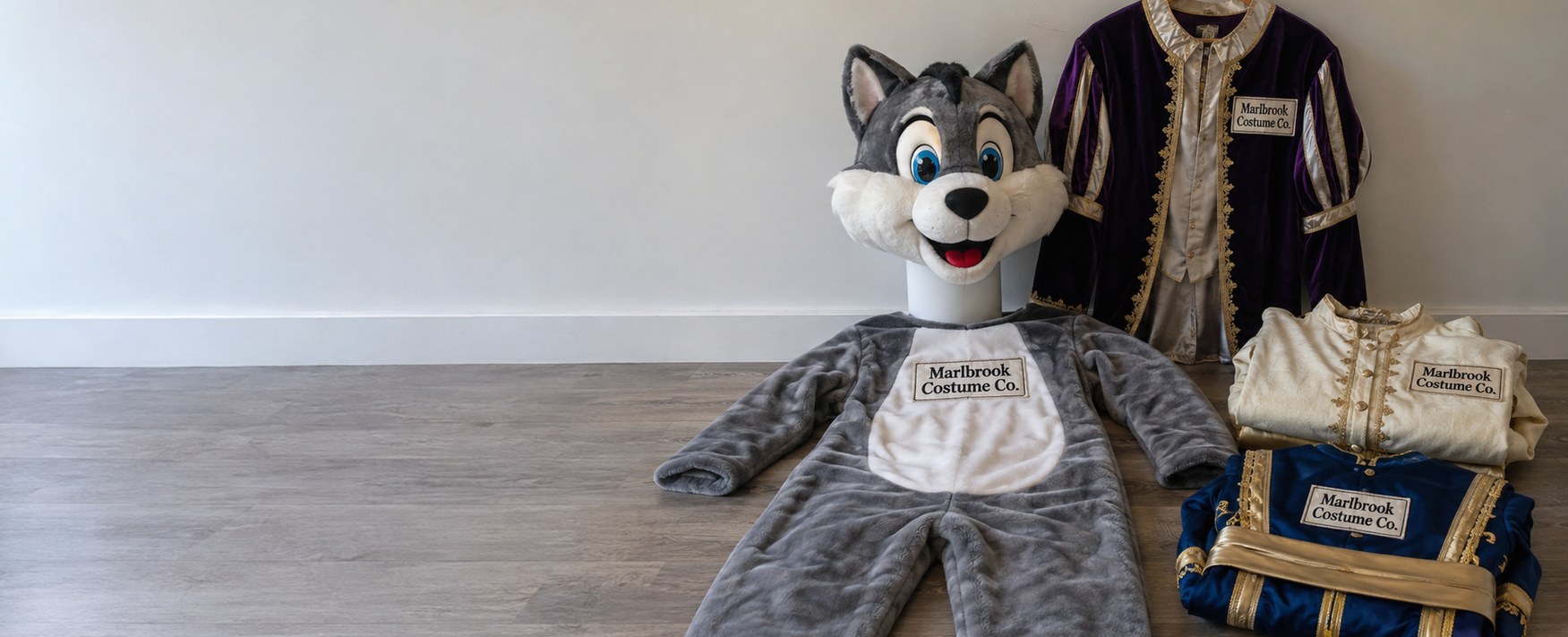
- Count peak simultaneous appearances, not the average month
- Spare gloves, feet and liners usually wear out before heads
- Twin costumes suit same-day appearances at two venues
- Minimum order 12, free mockup within 24 hours
- Standard turnaround about 2 weeks after approval
How many custom costumes should you order for your program?
The right number of custom costumes is the number of characters you need on the ground at the same moment, plus enough spare parts to keep every one of them presentable through a full season. Customized Costumes builds to a minimum order of 12, so most buyers start by counting appearances, performers and wear points rather than picking a round number.
A single mascot that appears once a month needs a very different plan from a street team that sends characters to several locations on the same weekend. Before you request a quote, write down three things:
- Peak simultaneous appearances: the busiest day of the year, and how many characters must be visible at once.
- Performers per character: how many people will take turns inside each costume, and whether they share a size.
- Wear points: the parts that get sweaty, scuffed or lost first, such as gloves, feet, inner liners and head cooling fans.
With those three answers, the quantity almost calculates itself. The order of 12 can be split across complete costumes and spare components in whatever mix your program actually needs, which is why the conversation with Customized Costumes starts with your calendar, not a catalog page.
Should you order spare parts or complete backup costumes?
For most mascot programs, spare components protect the character better than a complete second costume, because the parts that wear out are small and predictable. A head that is cared for can outlast several sets of gloves, feet and body suits, so spares of those parts keep the character looking new between appearances.
Complete backup costumes make sense in a few specific situations: when the same character must appear in two places at once, when a costume travels on a touring schedule with no time for repairs, or when a lost or damaged costume would cancel a booked event. In those cases a twin costume built from the same approved mockup is the safest choice.
| Situation | Better choice | Why |
|---|---|---|
| One character, regular local appearances | Spare gloves, feet and liners | Small parts wear first and are easy to swap |
| Several performers sharing one character | Spare body suits in their sizes | Each performer gets a fresh, fitted layer |
| Same character at two venues on one day | A matched twin costume | Both appearances look identical |
| Touring or trade-show circuit | Twin costume plus spare head parts | No downtime while one is being cleaned |
Spare parts are produced from the same artwork and color references as the original, so they match when you swap them in. Planning them into the first order is simpler than matching colors later.
How do performer rotations change the number of costumes you need?
Performer rotations change the costume count because a mascot costume needs rest between wearers, and so do the people inside it. When a character is booked for a long day, the usual answer is either a second identical costume so performers can swap without a pause, or a planned break schedule built around a single costume.
Think about a long outdoor festival. One costume worn back to back by several performers never gets a chance to air out, and the inner liner stays damp all day. With a twin costume, one performer can be on the floor while the other costume dries in the green room and the next performer cools down. Visitors see the same character all day, and nobody notices the swap.
Rotation planning also affects sizing. If your performers range from small to tall, ask Customized Costumes about adjustable body suits or separate bodies in different sizes that all fit under the same head. Heads, costume heads and masks, and fan-powered inflatables each handle size differences in their own way, so share your performer list early. Mascot safety basics, such as an escort and planned breaks, still apply no matter how many costumes you order.
How should a matched group set be split across sizes?
A matched group set should be split by collecting real measurements from every wearer before production, then adding a small allowance of extra sizes for late joiners. Group and parade costume sets look professional only when each costume fits, so guessing sizes from a headcount usually leads to costumes that are too tight on some people and baggy on others.
A simple process works for clubs, schools, marching groups and brand teams:
- Send every wearer the same measuring guide and a deadline.
- Group the answers into size bands and note anyone at the edges of a band.
- Add extras in the most common sizes for members who join after the deadline.
- Confirm the final split on the mockup approval, so the order of 12 or more is locked before production.
For historical and period costumes, the split matters even more, because tailored silhouettes forgive less than loose tunics. Customized Costumes researches the period details, but fit still depends on accurate numbers from each wearer. If names, roles or numbers differ across the set, list them alongside the sizes so every costume is labeled correctly before it ships.
When should you plan a reorder instead of ordering everything now?
A reorder is the better plan when your program is likely to grow, change shape or add new characters after its first season. Ordering everything up front locks in the size split and the design, while a planned second order lets you learn which parts wear fastest and which sizes your new members actually need.
Staged ordering works well for:
- New mascot programs that want to see how often the character is booked before buying twins.
- Growing parade and walk teams whose membership changes every year.
- Brand activations testing one market before rolling a character out to others.
- Theatrical and panto productions that may recast roles between seasons.
To make a reorder match the original, keep the approved mockup, the color references and the size chart in one place. Customized Costumes works from the approved design, so the next batch is built to the same character. Standard turnaround is about 2 weeks after approval, with faster turnaround available with express shipping, which means a reorder should be requested well before the event it is meant for.
The one case where staging is risky is a fixed launch date with no room for a second production slot. In that situation, order the spares and twins with the first batch.
What do inflatable costumes and costume heads add to the quantity plan?
Inflatable costumes and separate costume heads add a few extra items to the quantity plan, mainly spare power and cooling parts. Fan-powered inflatables depend on their blower and battery to stay upright, so a program that books long appearances should plan for spare batteries and a charging routine between wearers.
Vented costume heads benefit from the same thinking. Interior padding, sweatbands and any fitted cooling fans are the parts that wear first, and having spares means the head can be refreshed between performers without waiting for a full clean. A head that rotates through several wearers each week needs those spares far more than a head worn once a season.
If your program uses both a walkaround mascot and an inflatable version of the same character, count them separately. They are built differently, wear differently and are often booked for different kinds of event, so a quote from Customized Costumes should list each with its own spares.
How do you turn your quantity plan into an accurate quote?
The quickest way to an accurate quote for custom costumes is to send the quantity plan, not just a single number. Include the characters you need, how many complete costumes of each, the spare components, the size split and the date of the first appearance. With that information, the quote reflects your real program instead of a guess.
A complete request to Customized Costumes usually includes:
- Your character artwork or a description of the character.
- The number of complete costumes and the spare parts per character.
- Performer or wearer measurements, or at least the size bands.
- The style: mascot costume, inflatable, stage costume, period costume or matched group set.
- Your first event date and any later dates that could trigger a reorder.
You will get a free mockup within 24 hours, unlimited free revisions, and you pay nothing until you approve the design. That approval step is also the right moment to adjust quantities, because the plan is easiest to change before production starts.
Frequently asked questions
What is the best way to count how many custom costumes a mascot program needs?
Custom costumes for a mascot program are best counted from the busiest day on the calendar, not from the average month. Note how many characters must appear at the same moment, how many performers will share each one, and which parts wear first. Customized Costumes then helps you split the order of 12 or more across complete costumes and spare parts that match that peak.
Which mascot costume parts wear out first and deserve spares?
Mascot costume gloves, feet, inner liners and sweatbands usually wear out before the head or body, because they take the most contact, friction and moisture. Ordering spares of those parts with the first batch keeps the character looking fresh between appearances. Spares are made from the same approved artwork and color references, so they match the original costume when you swap them in.
When is a twin mascot costume worth ordering?
A twin mascot costume is worth ordering when the same character must appear at two venues on one day, when a touring schedule leaves no time for cleaning, or when a damaged costume would cancel a booked event. Customized Costumes builds the twin from the same approved mockup, so audiences at both appearances see an identical character with matching colors and details.
Can performers of different heights share the same character costume?
Performers of different heights can often share one character costume when the body suits come in separate sizes that fit under the same head. Tell Customized Costumes the height and build range of your performers before the mockup is approved. The team can then plan body sizes and any adjustable parts so every wearer looks like the same character on stage or on the street.
How many extra sizes should a matched costume set include for late joiners?
Matched costume sets usually need a few extras in the most common size bands, because new members tend to join after the measuring deadline. Look at your size split, see where most wearers cluster, and add extras there rather than at the edges. Customized Costumes confirms the final size split at mockup approval, so the extras are locked in before production.
Is it smarter to order custom costumes in stages or all at once?
Ordering custom costumes in stages is smarter when a program is new, growing or likely to change characters, because the first season shows which parts and sizes you really need. Ordering all at once suits a fixed launch date with no room for a second production slot. Either way, keep the approved mockup and size chart so later batches match.
How far ahead should a costume reorder be requested before an event?
A costume reorder should be requested well before the event, because standard turnaround is about 2 weeks after the design is approved, with faster turnaround available with express shipping. Customized Costumes builds reorders from the approved mockup, so approval can be quick, but sizes and quantities still need confirming. Leave extra time if the order includes new sizes or new characters.
Do fan-powered inflatable costumes need spare batteries for long events?
Fan-powered inflatable costumes depend on a blower and battery to stay upright, so long events usually call for spare batteries and a charging routine between wearers. Count the hours each inflatable will be worn and plan swaps before the power runs low. Customized Costumes can list spare power and cooling parts as separate items on the quote.
Should a walkaround mascot and an inflatable version be quoted separately?
A walkaround mascot and an inflatable version of the same character should be quoted as separate items, because they are built, worn and maintained differently. Each needs its own spares, such as gloves and liners for the mascot and power parts for the inflatable. Customized Costumes can quote both from one character artwork pack, keeping colors and features consistent.
What information makes a custom costume quote accurate the first time?
A custom costume quote is most accurate when the request lists each character, the number of complete costumes, the spare components, the size split and the first event date. Character artwork or a clear description helps too. Customized Costumes returns a free mockup within 24 hours, and you pay nothing until you approve the design, so quantities can still change at that stage.
How should a theater company plan costume quantities for recasting between seasons?
Theatrical costumes for a company that recasts often should be planned with spare sizes or a staged reorder, because a new performer may not fit the original build. Keep the approved designs and measurements on file after the first run. Customized Costumes can then produce replacement or resized costumes that match the original look, which keeps the production consistent across seasons.
Can spare costume parts be added to an order after the mockup is approved?
Spare costume parts can usually be added at or after mockup approval, since they are built from the same artwork and color references as the main costumes. Adding them before production starts is simplest, because colors and materials are matched in one batch. Ask Customized Costumes to list every spare part on the order so nothing is missed when the costumes ship.
Get a free mockup for your costumes
Send your logo or idea and the quantity you have in mind. Customized Costumes returns a free mockup within 24 hours, you approve the design before anything is produced, and standard turnaround is about two weeks with faster options available. Get a custom quote.