How to Clean, Store and Repair Custom Costumes: A Care Guide for Mascots, Inflatables and Stage Sets
Custom costumes last longest when you air them out after every appearance, clean each part the way its material needs, store them dry and supported, and repair small problems before they spread. This Customized Costumes care guide covers mascot heads and bodies, fan-powered inflatables, flame-retardant stage costumes and period sets, with the routines that keep a character looking new season after season.
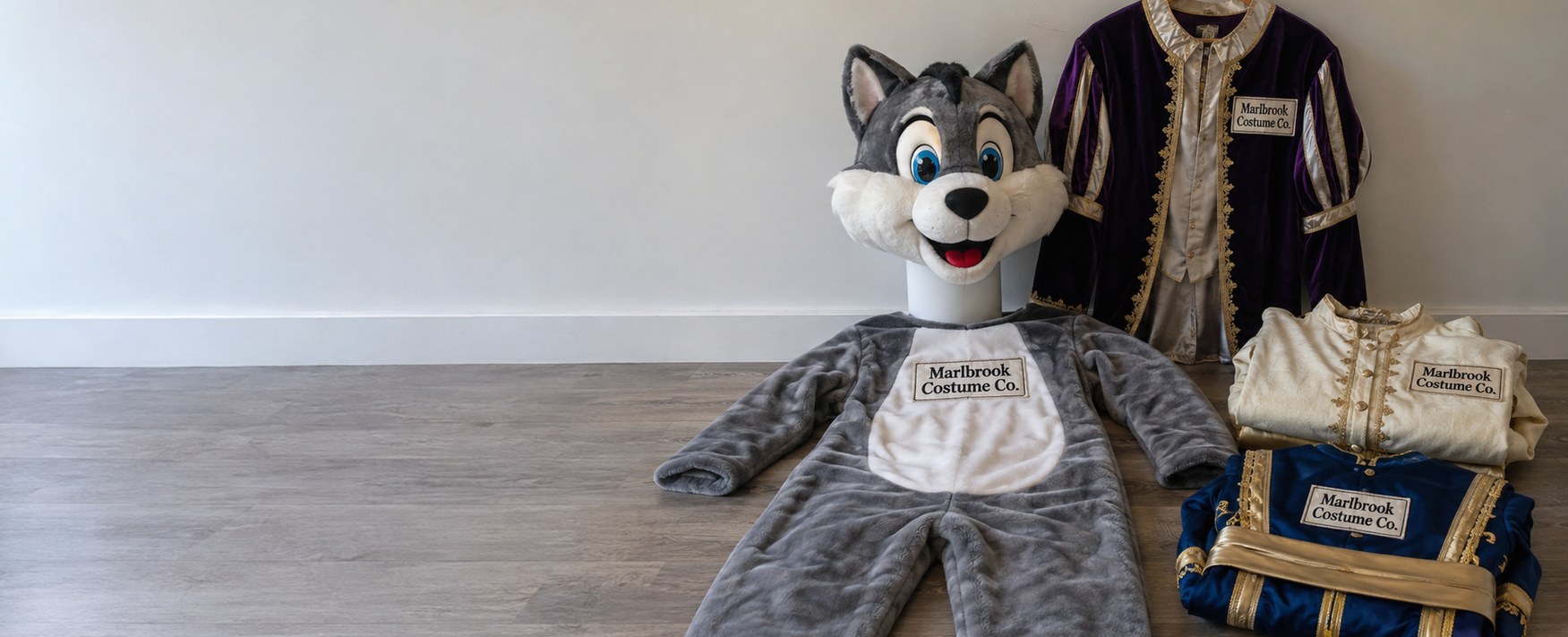
- Air every costume part as soon as an appearance ends; moisture causes most odor and mildew.
- Mascot costume heads are surface-cleaned and aired, never soaked or machine washed.
- Remove inflatable fan batteries before storage and keep the intake clear.
- Flame-retardant stage costumes follow their supplied care instructions exactly.
- Customized Costumes keeps approved artwork on file so replacement parts match.
How do you clean a custom mascot costume after an event?
Clean a custom mascot costume in stages: air the head, wipe the contact points, spot-clean the fur or fabric, and only then decide whether the body needs a full wash. Customized Costumes builds mascot costumes from separate parts, so the head, body, hands and feet can each be treated the way their materials need instead of all going into one machine.
The order matters because moisture is the real enemy. A performer leaves sweat in the head liner, the collar and the gloves, and that moisture is what turns into odor and mildew if the costume is zipped into a bag straight after an appearance. Air comes first, cleaning second, storage last.
- Unpack immediately. Open the bag as soon as you are back, even if cleaning waits until tomorrow.
- Separate every part. Head, body, hands, feet, tail and any jersey or sash each dry on their own.
- Turn fabric parts inside out. The inside carries the sweat; the outside carries the dust.
- Spot-clean marks while they are fresh. Use a mild cleaner tested on a hidden seam first.
- Brush fur only once it is fully dry. Brushing damp fur mats the pile and flattens the character’s shape.
Keep the care sheet that comes with your costume with the costume itself, not in an office drawer. The person unpacking after a game or parade is rarely the person who placed the order.
Can you wash a mascot costume head?
A mascot costume head should never go into a washing machine or be soaked. Most custom costume heads have a shaped foam or molded base under the fur or fabric skin, plus mesh vision panels and an internal harness, and soaking can soften the base, loosen glued details and leave water trapped inside for days. Head care is surface cleaning and airing, done often.
Wipe the interior liner, the chin area and the harness straps with a lightly damp cloth and a mild, fragrance-free cleaner, then let the head dry on a stand or a padded form with the opening facing down or sideways so air can move through it. Clean the vision mesh gently from the inside; pressing hard can stretch the mesh and blur the performer’s view, which the costume heads and masks page treats as a safety feature, not a cosmetic one.
- Use a washable head liner or balaclava for every performer so most sweat never reaches the head.
- Keep a small fan pointed into the head while it dries after a long appearance.
- Check glued features such as eyes, eyebrows and teeth after each cleaning and note anything lifting.
If the outer fur gets a heavy stain, treat it as a spot repair rather than a reason to wash the whole head.
How should the costume body, hands and feet be washed?
The body of a custom mascot costume is usually the easiest part to wash, but the method depends on what the body is made of and what is attached to it. A plush or fur body with internal padding needs gentler handling than a plain fabric jumpsuit, and printed or stitched branding should be protected from rough agitation. Follow the care label first, then the general rules below.
| Part | Usual cleaning approach | What to avoid |
|---|---|---|
| Fur or plush body | Hand wash or gentle cycle inside out, cool water, mild detergent | Hot water, tumble drying on high heat, bleach |
| Padded body | Remove inserts where possible; spot-clean the shell if padding is sewn in | Wringing, which can lump the padding |
| Gloves and hands | Wash often, since they touch every handshake and high five | Drying on a radiator, which can stiffen the palms |
| Feet and shoe covers | Brush off dirt, wipe soles, air out the interior | Submerging feet with built-in soles |
| Jersey, cape or sash | Wash like normal team apparel, inside out | Ironing directly on printed or applique logos |
Dry everything flat or hung on a wide hanger out of direct sun. Strong sunlight can fade bright character colors over time, and a faded body next to a fresh head makes the whole character look tired.
What care do fan-powered inflatable costumes need?
Fan-powered inflatable costumes need care for two things at once: the fabric shell and the fan system that keeps it standing. Customized Costumes builds inflatable costumes with a lightweight shell and a battery-driven fan, so care is mostly about keeping the shell dry and clean and keeping the fan intake clear.
- Remove the battery pack before cleaning or storing, and charge it according to its own instructions rather than leaving it in the costume.
- Check the fan intake after outdoor events. Grass, glitter and confetti can collect there and weaken airflow.
- Wipe the shell with a damp cloth and mild soap. Most inflatable shells should not go in a washing machine.
- Dry fully inflated if the shell got wet in rain, so no folded section stays damp.
- Fold loosely along natural seams rather than creasing printed faces or logos.
Small punctures or seam openings let air escape and make the costume sag. Note them on the care log and arrange a repair before the next event rather than taping over a printed area.
How do you care for flame-retardant stage and period costumes?
Flame-retardant stage costumes and researched period costumes both need care that protects what makes them special. For a flame-retardant costume, that is the treated or inherently flame-retardant fabric; for a historical or period costume, it is the fabric choice, trim and construction that make it look right for the era.
With flame-retardant costumes, follow the specific care instructions supplied with the costume and its documentation exactly. Some treatments can be weakened by the wrong detergent, fabric softener or washing method, and a wardrobe team should keep the paperwork with the costume so anyone washing it knows the rules. If a costume has been washed in a way the instructions do not allow, ask before it goes back on stage.
Period and theatrical and panto costumes often combine fabrics, trims and fastenings that react differently to water. Spot-clean collars and cuffs between performances, air garments on padded hangers, and save full cleaning for the end of a run. Quick-change fastenings such as hook tape and snaps should be checked after every show, because a failed fastening mid-scene is the costume problem an audience actually notices.
Where should custom costumes be kept between appearances?
Keep custom costumes somewhere cool, dry, dark and ventilated, with the head supported so it holds its shape. A costume that is clean but stored badly will still crush, fade or smell, and the head is the part that suffers most because its shape is the character’s identity.
- Head: on a stand, a padded form or in a hard case with room around it. Never stack anything on top.
- Body: on a wide padded hanger or folded loosely in a breathable garment bag, not a sealed plastic tub.
- Hands and feet: together in a labeled breathable bag so they never go missing on event day.
- Accessories: jerseys, sashes and props in the same bag or bin, labeled with the character’s name.
- Inflatables: shell folded loosely, battery stored separately.
Avoid hot car trunks, damp basements and attics. Heat can soften glued features and shift molded parts, and damp air brings mildew back into a costume that was cleaned properly. For multi-character sets, such as group and parade costume sets, number each bag to match the wearer list so the same person gets the same costume every time.
When should a custom costume be repaired or partly replaced?
Repair a custom costume as soon as a problem affects safety, fit or how the character reads to the audience, and replace parts when repairs stop holding. The parts that wear first are the ones that touch the most: gloves, feet, the head harness, zippers and the fur around the collar. Fixing small issues early is far easier than rescuing a costume the night before an event.
Keep a simple care log with each costume and record every appearance, cleaning and problem. Patterns appear quickly. A glove that needs stitching after every game is telling you to order spare hands; a head harness that keeps loosening means the fit should be checked for the current performer.
- Fix now: blurred or torn vision mesh, a loose harness, broken zippers, torn seams that could catch.
- Fix before the next event: lifting eyes or features, matted fur patches, faded jersey numbers.
- Consider replacement: hands and feet worn through, a body that no longer matches the head’s color.
Because Customized Costumes keeps your approved character artwork from the original order, replacement parts can be matched to the same design. Ask for spares through the quote form and mention which costume they belong to.
What should a costume care kit include?
A costume care kit is the small bag that travels with every custom costume so the handler can fix and freshen it on the spot. Building one costs almost nothing and saves the most common event-day problems, from a snagged glove to a head that smells after a long summer appearance.
- Washable head liners or balaclavas, one per performer
- A soft brush for fur and a lint roller for fabric
- A mild, fragrance-free cleaner and a few soft cloths
- Safety pins, a small sewing kit in the costume’s main colors and spare hook tape
- Spare batteries or a charged pack for inflatable costumes
- A copy of the care instructions and, for stage costumes, the flame-retardant documentation
- The care log, so the handler can note anything that needs repair
Assign the kit to the handler, not the performer. The performer is focused on staying in character and staying cool; the handler is the person who notices a lifting eyebrow or a dragging tail. For more on handlers and performer comfort, the how it works page explains what Customized Costumes includes with each build.
How does care planning fit into a new custom costume order?
Plan care before you order, because the way a costume will be cleaned and stored should shape a few build choices. Tell Customized Costumes where the character will appear, how often, in what weather and who will look after it, and the mockup and build notes can reflect that from the start.
A character that appears every weekend outdoors may benefit from removable padding, a separate washable jersey and spare gloves in the first order. A stage costume used for a short run may need fastenings chosen for quick changes and fabric chosen for the flame-retardant requirements of the venue. A school that stores its mascot over a long break needs a head case and a clear handover sheet more than anything else.
Customized Costumes returns a free mockup within 24 hours, offers unlimited free revisions and asks for no payment until you approve the design. Standard turnaround is about 2 weeks, with faster turnaround available through express shipping. Use the quote form to share your care and storage situation along with your artwork, and read the custom costume buyer checklist for the other questions worth settling before production.
Frequently asked questions
How do you get rid of the smell inside a mascot costume head?
A mascot costume head smells when sweat stays trapped in the liner and padding, so the fix is airflow and a liner habit. Open the head immediately after each appearance, point a small fan into it and wipe the harness with a mild, fragrance-free cleaner. Customized Costumes recommends a washable liner for every performer, which keeps most sweat out of the head in the first place.
Can a custom costume go in a regular home washing machine?
A custom costume body can sometimes go in a home machine on a gentle, cool cycle, but only if the care label allows it and the padding is removable. Heads, inflatable shells and parts with built-in soles should never be machine washed. Turn fabric parts inside out, use mild detergent, skip bleach and softener, and air dry rather than tumble drying on high heat.
How do you fluff matted fur on a mascot costume?
Matted fur on a mascot costume recovers best with patience and a soft brush once the fur is completely dry. Brush gently in the direction of the pile, working in small sections, and avoid high heat, which can melt or kink synthetic fibers. If a patch stays flat after brushing, Customized Costumes can advise whether a repair or a replacement panel makes more sense.
How often should mascot costume gloves be washed?
Mascot costume gloves should be washed more often than any other part because they touch every handshake, high five and railing. Many programs wash gloves after every appearance or two and keep a spare pair in the care kit. If gloves keep wearing through at the palms, order spare hands from Customized Costumes so the character never appears with mismatched or damaged hands.
Should the fan battery stay inside an inflatable costume during storage?
The fan battery in an inflatable costume should be removed before storage and kept separately in a cool, dry place. Storing the battery inside the folded shell risks heat buildup and drains the battery between events. Charge it according to its own instructions before the next appearance, and keep a charged spare in the care kit for long festival or parade days.
Can fabric softener be used on flame-retardant stage costumes?
Fabric softener and other laundry additives can interfere with some flame-retardant treatments, so a flame-retardant stage costume should be washed only as its supplied care instructions allow. Keep the documentation with the costume so every wardrobe volunteer can check it. If anyone is unsure how a costume was washed, Customized Costumes suggests confirming the care history before the costume returns to the stage.
What is the best way to dry a custom costume after rain?
A custom costume caught in rain should be unpacked the same day and every part dried separately in a ventilated room. Hang the body on a wide hanger, stand the head on a form with the opening exposed and inflate an inflatable shell so no fold stays damp. Avoid radiators and direct sun, which can stiffen fabric, fade colors and loosen glued features.
How can a school keep track of costume cleaning and repairs?
A school can track mascot costume cleaning and repairs with a simple care log kept in the costume bag. Record each appearance, who wore the costume, when it was cleaned and any damage noticed. Customized Costumes suggests naming one staff member as the costume owner, so the log is reviewed regularly and spare parts are ordered before an important game or assembly.
Can replacement parts be ordered for a costume that is already in use?
Replacement parts for a custom costume in use can be ordered from Customized Costumes, including hands, feet, jerseys and other worn pieces. Because the approved character artwork from the original order is kept on file, new parts can be matched to the same design. Mention which costume the parts belong to and include a recent photo so colors can be compared.
How should a period costume be cleaned between performances of a long run?
A period costume used across a long theatrical run is usually best kept fresh with spot cleaning between performances and a full clean at the end. Air garments on padded hangers, clean collars and cuffs gently and check trims and fastenings after each show. Customized Costumes can note which fabrics in a researched period costume need special care when it is built.
What should go in the bag that travels with a mascot costume?
The bag that travels with a mascot costume should hold every part plus a small care kit: washable head liners, a soft brush, a lint roller, a mild cleaner, safety pins, a sewing kit in the costume colors and spare batteries for inflatables. Customized Costumes recommends adding the care instructions and care log so any handler can manage the character confidently.
Does sunlight damage custom costumes during storage or display?
Sunlight can fade the bright colors of custom costumes over time, so storage and display spots should be out of direct sun. A faded body next to a fresh head makes a character look mismatched. Customized Costumes suggests storing costumes in breathable bags in a cool, dark room and rotating any costume displayed in a window or trophy case.
Get a free mockup for your costumes
Send your logo or idea and the quantity you have in mind. Customized Costumes returns a free mockup within 24 hours, you approve the design before anything is produced, and standard turnaround is about two weeks with faster options available. Get a custom quote.